Irons On, Lids Off: Where to Learn Keyboard Building in the UK in 2026
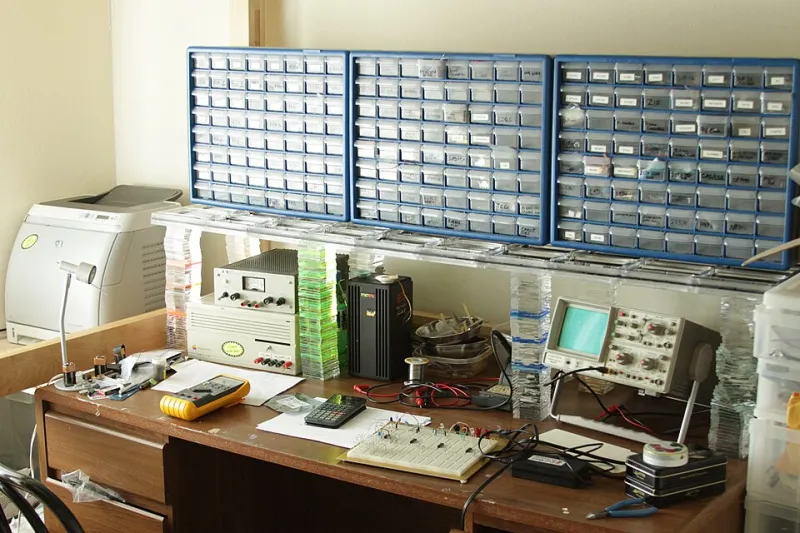
Photo: Windell Oskay from Sunnyvale, CA, USA, CC BY 2.0, via Wikimedia Commons
There is a moment in every keyboard build where the tutorial stops being useful. The camera is at a flattering angle, the instructor's joints are all gleaming little cones, and your own solder is sitting in a resentful grey blob on a pad you're now convinced you've ruined. That moment is exactly why building a board in a room full of other humans beats another video.
So here's the practical version: where to find UK workshops and hackspaces that will teach you to solder, roughly what they charge, and how not to turn up unprepared.
Why a Room Beats a Playlist
Three reasons, in order of importance.
Someone can see your work. Bad joints are hard to diagnose from your own perspective. A second pair of eyes catches the cold joint, the bridged pad, the diode in backwards.
You get proper gear. Temperature-controlled irons, brass wool, flux, fume extraction, a hot air station and a multimeter — the full setup costs a few hundred pounds, and that's before you buy a single switch.
You get a network. Half the value of a build session is the WhatsApp group afterwards, when you're three hours into a firmware problem and someone recognises the error message.
What a Beginner Session Actually Looks Like
Most beginner soldering workshops run three to four hours and follow a similar shape: safety and tool familiarisation, a practice board (usually a little LED blinker or a through-hole ornament), then moving onto the real thing — a macropad, a numpad, or a 40% kit if the session is longer.
Keyboard-specific sessions tend to be full-day affairs, because you're doing switch soldering, stabiliser tuning, sometimes a controller and firmware flash on top. Expect to leave with something that types.
The Hackspace Circuit
Hackspaces — sometimes called makerspaces, hacklabs or fablabs — are member-run workshops with shared tools. Most run open evenings where non-members can walk in for free or a few pounds, and many host occasional soldering intro sessions. Here are the kinds of places worth checking, city by city:
London — the capital's longest-running hackspace in the east of the city, plus a cluster of smaller community workshops and library-run maker spaces. Open evenings are the standard entry point.
Bristol and Bath — one of the strongest maker scenes in the country, with a well-established hackspace and frequent electronics evenings.
Manchester, Leeds and Sheffield — all three have active hackspaces with electronics benches, and Sheffield in particular has a cluster of small electronics retailers and kit makers that occasionally run in-person sessions.
Edinburgh and Glasgow — both cities have long-running hacklabs with open nights and a regular electronics crowd.
Nottingham, Leicester, Cardiff, Newcastle, Belfast, Norwich, Cambridge and Oxford — all have hackspaces or makerspaces of varying sizes, and most will happily run a soldering intro if you ask nicely enough.
Do not trust any list, including this one. Schedules change, rooms move, and volunteer-run spaces go through quiet patches. Always check the space's own calendar or mailing list in the week before you travel.
Independent Workshops and Kit Makers
Alongside hackspaces, a growing number of small UK kit sellers and electronics shops run occasional build days, often announced on their newsletters rather than their shop pages. These are typically more structured than a hackspace evening and cost a bit more, but you get a curated kit and a guaranteed working outcome.
University makerspaces are another underused route. Many run public workshops or will let community members join for a small fee, particularly in term time. It's worth emailing the engineering or digital fabrication department directly — the worst answer you'll get is a polite no.
Big Events Worth Diarising
If you want to try before you commit to a monthly membership, the larger UK maker events are ideal. Maker Central at the NEC, various regional maker faires, and the occasional electronics camp bring together sellers, workshop tents and people who will happily let you solder a practice joint under supervision. Keyboard meetups — usually advertised through enthusiast forums and Discords — are more show-and-tell than hands-on, but they're the fastest way to find out who's running sessions locally.
What to Bring (and What Not To)
Bring: a notebook, a USB power bank if you're flashing firmware, your own switches if you're fussy about feel, and a bag that can take a finished board. Bring cash for the kitty.
Don't bring: your own cheap iron unless you've checked it's welcome (shared benches have rules about untested mains gear), any solvent-based cleaners, or an expectation that someone will fix your half-finished project for free.
Wear sensible clothes — no dangling sleeves, no open-toed shoes. Tie long hair back.
Costs, Roughly
- Hackspace open evening: free to £5.
- Full-day induction or membership day pass: £5–£20.
- Monthly hackspace membership: £15–£35, often with a joining fee.
- Beginner soldering workshop: £25–£60, usually including a practice kit.
- Keyboard build day with a supplied kit: £60–£150 depending on the board.
Compare that to the cost of one ruined PCB and a replacement controller, and it stops looking expensive.
Finding Your Local Group
The reliable route is a search for "hackspace" plus your nearest city, followed by a look at their events page rather than their homepage. Failing that, ask in any UK keyboard or electronics community — somebody always knows somebody with a garage and a reflow oven.
Turn up to an open evening even if you have nothing to build. Wander over to the electronics bench, say you're interested in keyboards, and see what happens. The community is small, welcoming and mildly obsessed. You'll fit in.