The Two-Week Window: A Day-by-Day Returns Plan for a Keyboard Bought Online
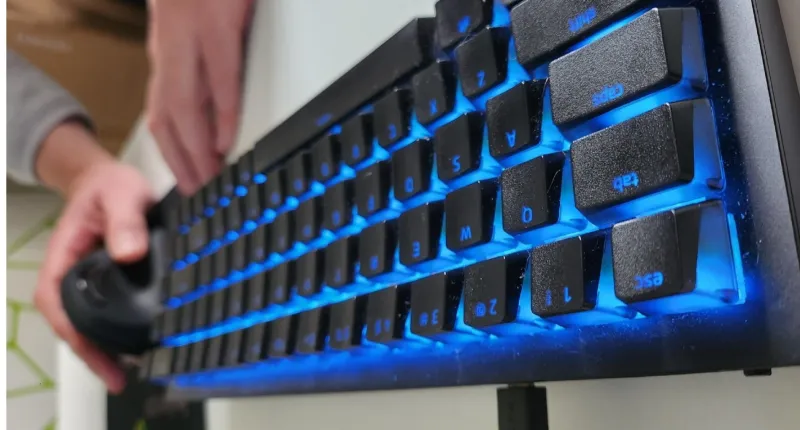
Photo: keyboard packaging return parcel UK desk unboxing, via www.indevops.com
A keyboard bought online arrives with a strange kind of pressure. You want to like it. You also know there is a clock running. In the UK, most distance purchases come with a 14-day cooling-off period, but the details matter: when the clock starts, what counts as fair inspection, and how faulty-goods rights differ from simply changing your mind.
This is not legal advice. It is a practical diary for using the window properly, keeping your options open and avoiding the classic mistake of discovering a problem on day 15.
Day 0: delivery day
Photograph the parcel before you open it. If the box is crushed or damp, photograph that too. Open it on a table, not over a hard floor. Keep the outer box, inner box, bags, foam, cable ties and any little cards. You do not need to preserve the packaging like a museum piece, but you do need to keep it resale-ready. Do not write on the product box. Do not peel protective films until you have decided to keep the board.
Check the order number and serial number against the paperwork. If the model is wrong, tell the seller today rather than next week.
Day 1: inspect, do not decorate
This is the day for a careful visual check. Look at the case for cracks, scratches and uneven anodising. Check the keycaps for legend errors, shine or missing caps. Look at the stabilisers. Wiggle the hot-swap sockets gently if the board has them. Check the cable, dongle, manual and any included tools.
Test every key with a keyboard tester or a plain text document. Do not just mash the home row. Test the corners, the modifiers, the function row and any media keys. If the board is wireless, test Bluetooth and 2.4GHz. If it has RGB, check that every LED works.
Day 2: live with it
Use the keyboard for a normal working day. Type an email, write a document, play a game, do whatever you actually do. Notice the things that do not show up in photos: flex, ping, stabiliser rattle, the angle of the case, the sound of the spacebar. Check the layout. If you ordered ISO-UK, make sure it is genuinely ISO-UK and not a US board with a UK sticker on the box.
Day 3: decide what kind of return this is
There are two different paths.
A change-of-mind return is the cooling-off route. Under the Consumer Contracts Regulations 2013, you usually have 14 days from delivery to cancel, and then 14 days to send the goods back. The seller must refund within 14 days of receiving the goods or evidence of return. You may lose out on return postage unless the seller agrees otherwise, and the item must be returned in a condition that shows you only handled it as you would in a shop.
A faulty-goods return is different. Under the Consumer Rights Act 2015, goods must be as described, of satisfactory quality and fit for purpose. If the keyboard is faulty, you have a short-term right to reject within 30 days, and rights to repair or replacement after that. Faulty goods are not a change of mind, and you should not be charged a restocking fee just because the board arrived broken.
Tell the seller promptly if you think it is faulty. Do not wait until day 13 to mention a dead switch.
Day 4: document everything
Take clear photos in daylight. Photograph the box, the serial number, the damage or fault, and the layout. Record a short video of the key test. Keep every email and chat message. If you speak to someone by phone, follow up with an email summarising what was agreed. This is not paranoia. It is just a paper trail.
Day 5–7: keep the packaging alive
Do not throw away the inner tray. Do not lose the cable. Do not let the cat sleep on the box. If you are returning the board, the original packaging is the easiest way to get it back safely. If you have already recycled it, use a sturdy outer box and plenty of padding. Remove batteries if the board uses them. Do not put loose keycaps in a bag with the board.
Day 8–10: make the call
By now you should know. If you are keeping it, peel the films and enjoy it. If you are returning it, ask the seller for a return authorisation and the exact return address. Check who pays postage. For a change of mind, it is usually you. For a faulty item, it should normally be the seller. Get it in writing.
Day 11–13: pack and send
Use a tracked service and keep the receipt. Photograph the packed parcel and the label. If the courier collects, ask for a collection receipt. Do not rely on a doorstep photo as proof of return. Send the parcel in time to meet the 14-day return deadline, and keep the tracking number somewhere you will find it again.
Day 14: close the loop
Check that the refund has arrived. If not, chase politely with your order number, tracking number and any agreed return terms. Keep the correspondence until the money is back in your account.
The 14-day window is not a trap. It is a chance to test a keyboard like an adult, with the packaging intact and the evidence ready. Use it well, and the only thing you will remember is whether the board was worth keeping.