The Bill After the Box: What a Keyboard Kit Really Costs to Land in the UK

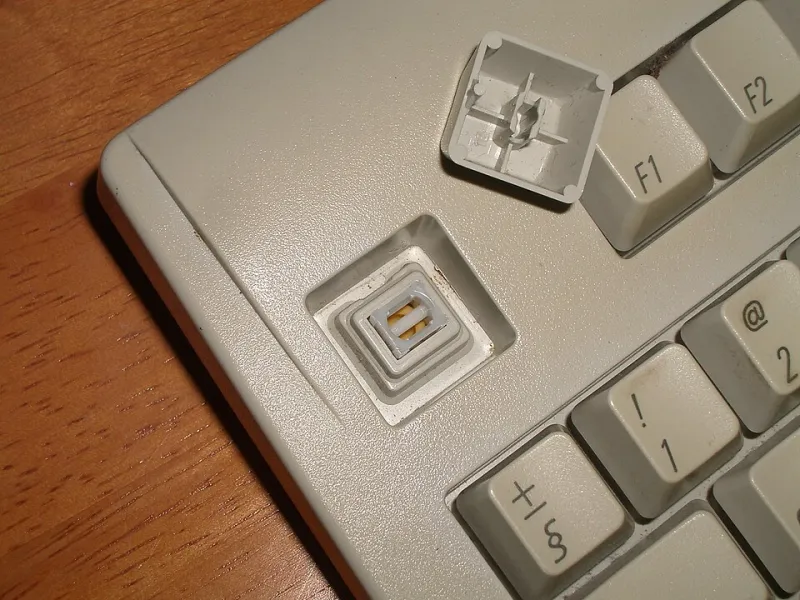
Photo: Hanif Al Husaini, CC BY 3.0, via Wikimedia Commons
Nobody minds paying for a keyboard. What people mind is paying for it twice — once at checkout, and again on a grey Tuesday when a courier texts to say there is £58 outstanding before delivery. Nothing about the board has changed. Only the arithmetic has, and it was arithmetic nobody showed you up front.
This is a guide to landed cost: the honest total of getting a kit, a keycap set or a bag of switches from a seller abroad onto your desk in the UK. It assumes you are a normal buyer rather than a VAT-registered business, because the rules genuinely differ.
The two numbers worth memorising
Since the January 2021 changes, importing into Great Britain has run on a £135 split. It is not a duty threshold in the way people assume. It is a VAT collection threshold, and it decides who charges you and when.
Under £135 (goods value, excluding shipping): UK VAT should be charged by the seller at the point of sale. If the seller is set up properly with HMRC, you will see 20% added at their checkout and that is the end of it — no border charge, no courier fee, no surprise. If a seller ships under-£135 goods without charging UK VAT, that is their compliance problem, not a discount for you, and some couriers will still try to bill you.
Over £135: the parcel becomes a normal import. VAT at 20% is calculated on the goods plus the shipping plus any duty, and it is collected by the courier before delivery. Add a handling fee for their trouble.
There is also a gift exemption, but at £39 of value and capped at £135 overall. Marking a £300 group buy as a gift is not a loophole, it is a customs offence, and the seller who offers to do it is telling you something useful about how they run their business.
Duty is usually zero, but look at the code
Here is the genuinely good news: most of what we buy lands at 0% duty. Keyboards, keycap sets and switch parts generally sit under commodity codes in the 8471 and 8473 families, which carry a zero rate. A £400 kit from Asia may well attract VAT and a courier fee and nothing else.
The exceptions are worth knowing. Desk mats, cables, carry cases and anything classified as an accessory rather than a computer part can attract a few per cent. Bags and textile goods are a classic case. If a seller lists a single commodity code across a whole mixed order, that is a flag, not necessarily a fraud — just ask which code applies to which line.
If you do get charged duty, remember it is calculated on goods plus shipping, not on goods alone. Shipping is part of the customs value. It always has been.
The courier's cut
This is the line people forget. Couriers charge for handling the customs transaction — typically £8 to £15 depending on the carrier, sometimes a percentage with a minimum. At the time of writing Royal Mail sits at the lower end, Parcelforce and the integrators higher. On a small parcel it can be 5% of the whole order. On a £60 parcel it can be brutal.
Some sellers offer DDP shipping — delivered duty paid — where the tax is settled in advance. It often looks expensive at checkout and turns out to be roughly the same as paying at the door, minus the adrenaline. If DDP is offered at a sensible price, take it.
Three landings, worked through
A £95 keycap set from Germany, £12 shipping. Total £107, under the £135 line. A compliant seller adds UK VAT at checkout: about £21.40. No border charge, no handling fee. Landed: roughly £128. The dull, correct outcome.
A £240 kit from the United States, £30 shipping. Total £270, over the line. VAT at 20% on £270 is £54. Duty at 0% is nothing. Handling fee £12. Landed: about £336 — a 24% uplift on the sticker price. If that kit had been misclassified at 4.7%, you would add another £12.69 and land near £349.
A £520 group buy board from East Asia, £45 shipping. Total £565. VAT £113. Duty at 0%. Handling £15. Landed: about £693. That is before you account for twelve months of waiting, and it is exactly why group buys deserve a budget line of their own rather than an impulse tap.
Before you press pay
Five minutes on the seller's shipping page saves most of these conversations. Look for:
- A clear statement of whether prices include UK VAT or exclude it.
- A UK VAT registration number, if they claim to collect it.
- Which carrier does the last mile, because that determines the handling fee.
- Whether they ship DAP or DDP — and if they do not know what those mean, assume DAP.
- Whether the commercial invoice declares the full value. It should.
- A returns address that is not a PO box in another jurisdiction.
Screenshot the shipping page. Sellers change terms quietly, and a timestamped screenshot has settled more than one argument.
Keep the paper
For anything over the £135 line, keep the order confirmation, the commercial invoice, the courier's customs charge notice and your payment receipt. Store them with the build notes for at least a year. If a parcel arrives damaged, or a charge looks wrong, the invoice is the only thing that identifies the declared value, the commodity code and the date of import. Without it you are arguing from memory, and the courier knows it.
If a charge does look wrong — VAT calculated on a figure higher than you paid, or a handling fee you were never told about — the courier's customs team is the first call, HMRC the second. Be polite, be specific, attach the invoice. Refunds happen; they just take weeks.
One last thing
If you are in Northern Ireland, the Windsor Framework means the rules run differently again. Check before ordering rather than after. And wherever you are, build the landed cost into the budget from the start. A £336 keyboard is a perfectly good keyboard. A £240 keyboard that turns out to cost £336 is the one that leaves a mark.