The Long Clack Home: A 2026 Keyboard Pilgrimage from Bletchley to South Kensington
There is a particular kind of quiet in a museum full of old machines. Not silence exactly — more the hum of cooling fans, the odd relay click, the sense that every switch was once part of somebody’s working day. For a keyboard enthusiast, that quiet is catnip. Britain has a rich input-device story, and you can follow a good chunk of it by train, foot and a sensible flask. This is not a completist’s catalogue. It is a 2026 keyboard pilgrimage with practical stops, aimed at anyone who cares about key feel, legends, layouts and the long, slightly messy journey towards the ISO-UK boards many of us build today.
Bletchley Park: input before the modern keyboard
Start at Bletchley Park in Buckinghamshire. The codebreaking story is famous, but look past the romance of the huts for a moment and pay attention to how information actually went in. You will see plugboards, paper tape, rotors and teleprinter equipment — systems where input was a physical process rather than a single slab of keys. That distinction matters. The modern keyboard is a convenient bundle of switches, legends and a controller, but Bletchley reminds you that input is always a system: human hands, machine logic, feedback and error correction.
Enthusiast takeaway: when you look at old equipment, ask what the operator actually touched. Was it a key, a plug, a lever, a punched card? Then look at the feedback — a lamp, a printed character, a mechanical clunk. That habit will make you a sharper judge of modern boards too. A satisfying keyboard is not just a nice switch; it is the whole chain from fingertip to screen.
The National Museum of Computing: working machines, useful lessons
The National Museum of Computing sits on the Bletchley Park estate and is a separate attraction, so check opening times before you travel. It is worth the planning. Working exhibits and restored machines give you something a static display cannot: motion. You can watch relays chatter, tape spool and old systems do their thing. Colossus is the headline act, but for keyboard people the supporting cast is just as interesting — teleprinters, early terminals and the physicality of data entry.
Do not expect every exhibit to be a hands-on typing demo. Instead, use the visit as a mechanism-spotting exercise. Look at key travel and keycap shape on any terminal or console you can see. Notice how legends were printed, engraved or moulded, and how often they favoured function over fashion. Compare the springy, long-throw feel implied by old office equipment with the short-travel tactility we argue about in group buys. Neither is objectively better; they are answers to different constraints.
Nearby practical note: Bletchley is easy to reach from London and Milton Keynes, and the museum estate makes a solid full-day trip. Bring a notebook, not just a camera. Photographs of keycaps are useful; notes about feel, sound and context are better.
London’s Science Museum: from terminals to bedroom desks
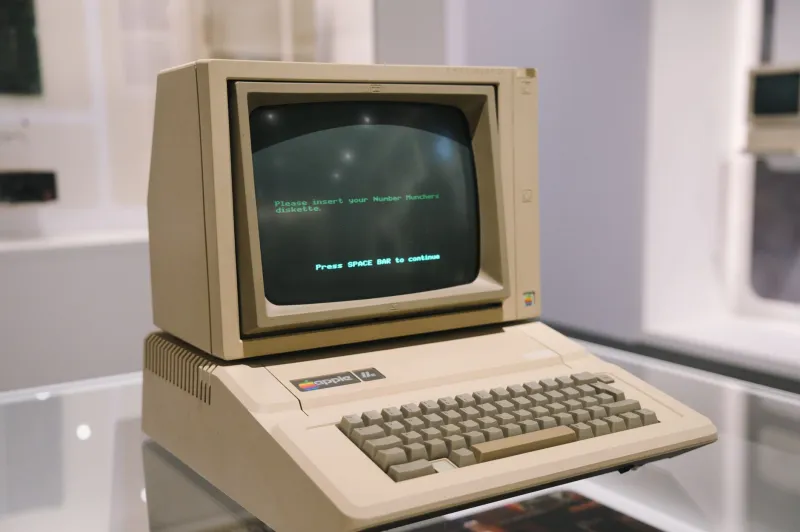
Head into London and the Science Museum in South Kensington gives you a broader arc. The Information Age gallery is the obvious port of call for computing and communications history, and the wider museum has plenty of office machinery, early home computers and consumer electronics to browse. Again, the keyboard is rarely the label’s main character. That is the point. Keyboards were often treated as furniture — necessary, unglamorous, built to survive a typing pool.
This is where the layout story gets interesting. On old terminals and micros you can see how much variation existed before the IBM-style default hardened into muscle memory. Function keys wandered. Return keys changed shape. Modifier clusters were a suggestion rather than a rule. The ISO-UK layout we now treat as normal — tall Enter, short left Shift, an extra key next to Z, £ on the 3, quote marks and at-sign in their very British places — is a settlement, not a natural law.
Enthusiast takeaway: when you next build or buy, look at an ISO-UK board as a historical artefact as well as a tool. Does the legend set make sense for UK punctuation? Is the Enter shape familiar or merely available? Are you choosing ISO because it suits your fingers, or because a group-buy photo looked nice? Both are allowed, but the first is cheaper in the long run.
The bedroom end of the trail
After the museums, the trail turns domestic. Britain’s modern custom scene is small but stubborn, with group buys, meetups and maker spaces scattered across the country. London tends to host the biggest gatherings, but regional meetups pop up in pubs, libraries and university rooms, often announced through community Discords, subreddits and local retro-computing groups. Check listings before you set out; a lot of the best events are volunteer-run and deliberately low-key.
If you want a hands-on demo, bring a board you are happy to let strangers tap. The fastest way to understand switch weights, plate materials and keycap profiles is to compare them in person. Museum visits teach you where the ideas came from; meetups teach you what you actually like under your fingers.
A practical route for 2026
A sensible long weekend looks like this: Bletchley Park and the National Museum of Computing on day one, with an early train and a packed lunch. Day two, the Science Museum in London, followed by a browse around a nearby keyboard meetup if the dates line up. Book museum slots where required, check train strikes and engineering works, and do not assume every gallery is open. November is a good month for indoor geekery, though the walk between Bletchley’s sites can be brisk.
Above all, go with a question. Why did this key feel like that? When did this layout become familiar? Who decided the legends should be printed in that corner? The answers are rarely neat, but they make the hobby richer. Britain’s keyboard heritage is not just a cabinet of old terminals. It is the reason your ISO-UK build feels like home — and the reason there is still room to argue about the Enter key.