Your PCB Arrived Dead. Now What? A UK Returns Playbook for Faulty Keyboard Kits
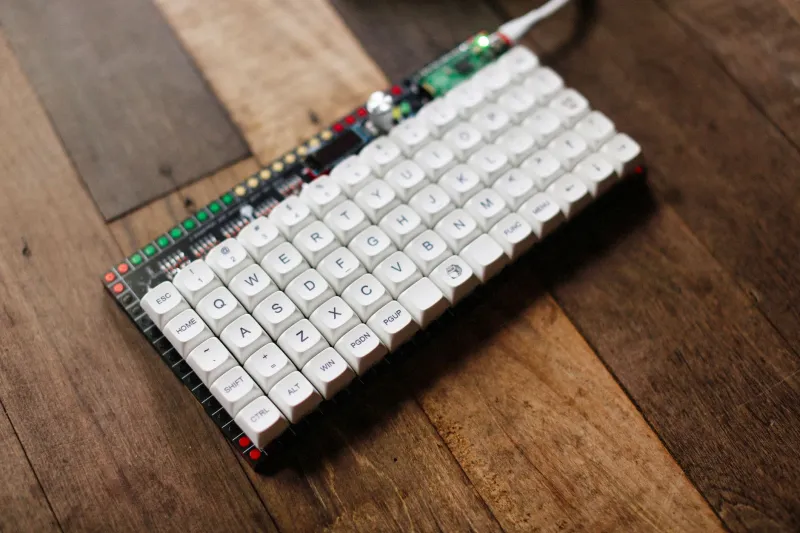
There is a particular kind of silence when you plug in a freshly delivered keyboard kit and nothing happens. Not the good silence of a well-lubed linear. The other silence. The one where you start reseating the USB cable, then the ribbon, then your faith in the parcel network.
If that happens in 2026, you are not stuck with an expensive paperweight. UK consumer law gives you real remedies, but the route you take depends on who sold you the kit, how you paid and what you do in the first few days. Here is the practical version, written for people with a soldering iron warming up in the background.
First, work out who you actually bought from
The Consumer Rights Act 2015 applies when you buy from a trader — a business selling in the course of its trade. That covers most UK keyboard vendors, shops and many group-buy organisers. It does not cover a private seller flogging a spare PCB on a forum, where the default is caveat emptor and your protection is much thinner.
Group buys sit in a grey area. If the organiser is acting as a business, the Act should apply. If it is a hobbyist running a one-off order, you may be relying on their terms and goodwill rather than statutory rights. Check the invoice, the seller's About page and whether VAT is charged. If you paid by credit card and the item was over £100, Section 75 may also give you a claim against the card provider. Debit cards and PayPal have their own chargeback schemes, which are useful but not identical.
The 14-day cancellation right is not the same as a faulty-goods claim
For most online orders, the Consumer Contracts Regulations 2013 give you 14 days from delivery to cancel for any reason, then 14 days to send the goods back. This is your cooling-off right. It is useful if you changed your mind about the layout or the colourway. It is not your best route if the PCB is dead on arrival.
There are exceptions. Customised or personalised goods are often excluded, and group-buy deposits can be trickier if the item was made to your specification. Return postage is usually your cost under a change-of-mind cancellation, although the seller must tell you that clearly. If the goods are faulty, you should be looking at a fault remedy instead, where you should not be out of pocket for the return.
Faulty goods: the 30-day short-term right to reject
Under the Consumer Rights Act 2015, goods must be as described, of satisfactory quality and fit for purpose. If your kit arrives with a dead column, a cracked case or a switch that chatters out of the box, that is likely a fault.
In the first 30 days after delivery, you have the short-term right to reject and get a full refund. You do not have to accept a repair first. After 30 days, the remedy shifts: the retailer gets one attempt at repair or replacement, and if that fails or is not possible, you can ask for a price reduction or a final right to reject. In the first six months, the burden is generally on the retailer to show the fault was not there at delivery — so do not let anyone tell you that you must prove you did not break it.
A manufacturer warranty is extra protection, not a replacement for your statutory rights. If a vendor says 'warranty only, contact the maker', you can politely point back to the retailer's responsibility under the Act.
Group buys: read the terms, keep the receipts
Group buys often come with disclaimers about delays, colour variance and final sale status. Some of that is normal for a pre-order. But if the organiser is a trader, terms cannot simply sign away your statutory rights. If the kit arrives faulty, report it promptly and in writing. If the group buy collapses before delivery, your route may be a chargeback or a claim against the organiser, depending on how you paid.
Keep every invoice, order confirmation and update email. Screenshot the product page. If the seller changes the terms after you paid, your original confirmation is the version that matters.
Document the problem without weakening your claim
This is where enthusiasm can undo a good case. Do not start desoldering, flashing firmware or modifying the case before you have reported the fault. Take photographs of the packaging, the serial label and the PCB as it arrived. Record a short video showing the fault with a known-good cable and, where possible, a known-good switch or key tester. If you have a multimeter, note the readings, but do not turn the email into a lab report.
Keep a simple timeline: delivery date, first test, fault observed, date you contacted the seller. Do not write 'I probably damaged it' in a forum post and then expect the vendor to ignore it. Be factual: 'The PCB arrived with no response on column 4. I tested with a known-good USB-C cable and did not modify the board.' Keep the original packaging until the claim is resolved.
Plain-English scripts for the first email
You want to be clear, calm and specific. Here is a template you can adapt.
Subject: Faulty [item] — order [number] — request under Consumer Rights Act 2015
Hi [name],
I received order [number] on [date]. The [PCB/switch set/case] is faulty: [describe the fault in one sentence]. I have tested it with a known-good cable and have not modified the item. Photos and a short video are attached.
I am requesting a remedy under the Consumer Rights Act 2015. Please confirm whether you will refund, repair or replace the item. I am happy to return it using your instructions.
Thanks, [your name]
If they fob you off with a warranty claim, reply: 'Thanks for coming back to me. As the retailer, you are responsible for the remedy under the Consumer Rights Act 2015. The manufacturer warranty is additional. Please confirm how you will resolve this within the next 14 days.'
If they stall, send a final letter before action: 'I have not received a resolution despite my emails of [dates]. If I do not hear from you within 14 days, I will consider a chargeback or small claim. I would rather resolve this directly.' Keep it factual and keep a copy.
If they stall: chargeback, ADR and small claims
Paying by credit card gives you Section 75 for purchases over £100. Debit cards and PayPal have chargeback routes. These are not instant, and they work best when you have a clear paper trail. Citizens Advice and Resolver can help you draft a formal complaint. For smaller sums, the online small claims process is designed to be usable without a solicitor.
The bottom line
A dead-on-arrival kit is a pain, but it is not a dead end. Know who you bought from, report the fault before you modify anything, and ask for the remedy you are entitled to rather than the one that is easiest for the vendor. Keep the packaging, keep the emails and keep the tone boringly reasonable. The clack can wait a fortnight.